
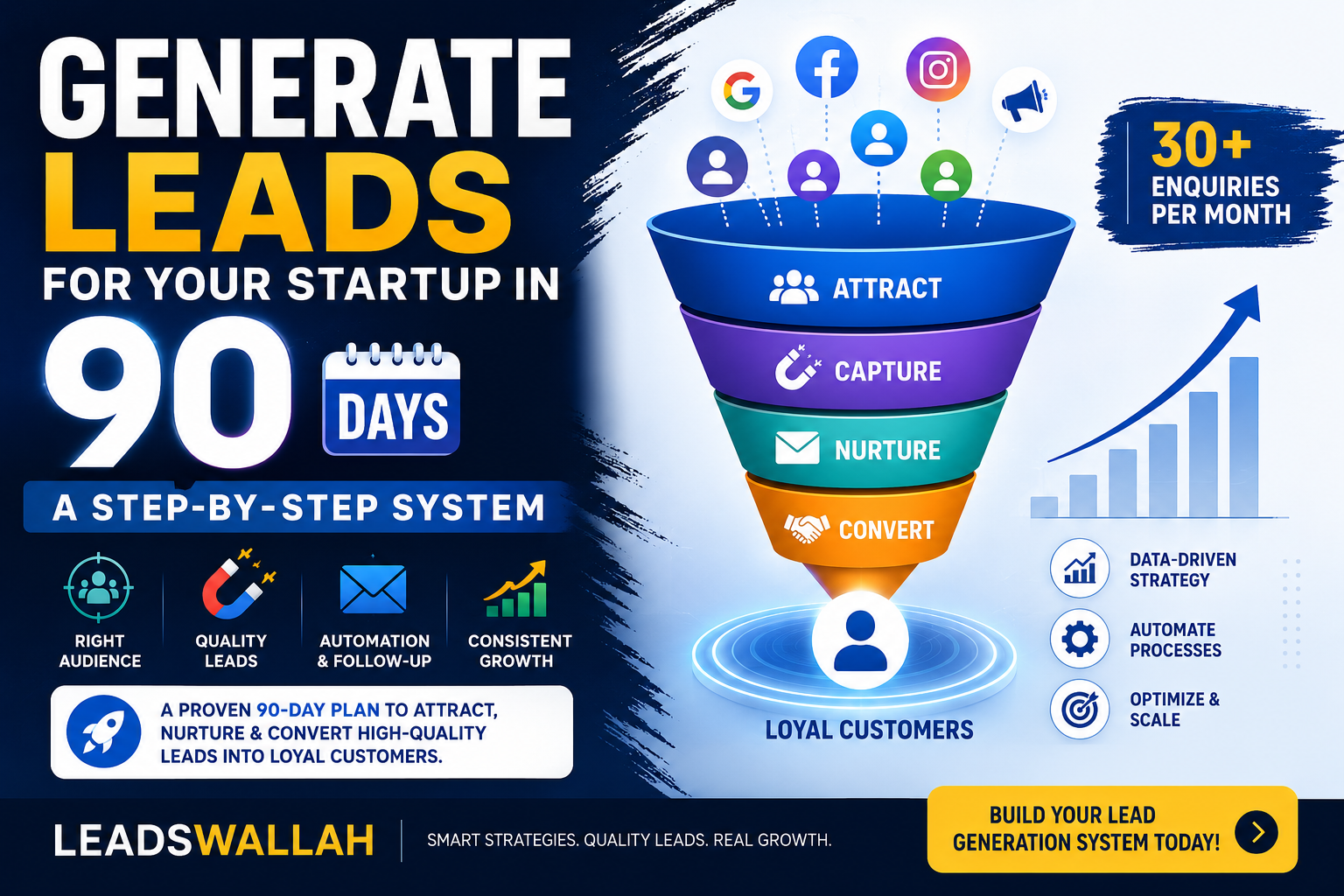
Generating leads is one of the biggest challenges businesses face today. Whether you’re a startup, a small business, or an established company, attracting potential customers consistently requires more than just running advertisements or posting on social media. Without a clear strategy, businesses often spend time and money on marketing activities that produce inconsistent or disappointing results.
Many entrepreneurs believe that launching a Google Ads campaign or boosting a few social media posts will instantly generate customers. However, successful lead generation doesn’t happen by chance—it requires a structured system that guides potential customers from discovering your business to becoming loyal clients.
A well-planned lead generation strategy combines website optimization, audience research, compelling content, paid advertising, automation, and continuous performance analysis. When these elements work together, businesses create a predictable pipeline of qualified leads instead of relying on referrals or occasional inquiries.
At Leadswallah, we’ve seen that businesses following a systematic approach consistently outperform those relying on random marketing efforts. That’s why we’ve developed a practical 90-day framework designed to help businesses establish a strong digital presence, generate high-quality leads, and build a scalable growth engine.
In this guide, we’ll walk you through a proven 90-day lead generation roadmap, covering everything from preparing your business for growth to launching campaigns, optimizing performance, and scaling your results.
Why Most Businesses Fail to Generate Consistent Leads

Many businesses invest in digital marketing but struggle to achieve consistent results because they focus on isolated tactics rather than a complete strategy.
Common reasons include:
- Launching advertising campaigns without understanding the target audience.
- Having a website that attracts visitors but fails to convert them into leads.
- Relying solely on social media without building an email list or CRM.
- Not tracking campaign performance or customer behavior.
- Inconsistent content creation and poor SEO practices.
- Weak follow-up processes that allow potential customers to slip away.
Without a structured lead generation system, businesses often experience unpredictable inquiries, fluctuating sales, and rising marketing costs.
The solution isn’t necessarily spending more on advertising—it’s building a process that attracts, captures, nurtures, and converts leads consistently.
What Is a Lead Generation System?

A lead generation system is a structured process designed to attract potential customers, collect their information, nurture their interest, and guide them toward becoming paying clients.
Rather than relying on one marketing channel, a successful lead generation system integrates multiple strategies, including:
- Search Engine Optimization (SEO)
- Google Ads
- Meta Ads (Facebook & Instagram)
- Content Marketing
- Landing Pages
- Email Marketing
- WhatsApp Automation
- CRM Integration
- Marketing Automation
- Conversion Rate Optimization (CRO)
Each component supports the others, creating a seamless customer journey that improves lead quality and increases conversion rates.
Why a 90-Day Plan Works

Business growth doesn’t happen overnight. Effective marketing requires testing, learning, and optimization.
A 90-day timeline provides enough time to:
- Build a strong digital foundation.
- Understand customer behavior.
- Collect meaningful campaign data.
- Optimize marketing performance.
- Generate measurable business results.
Instead of expecting instant success, businesses following a structured 90-day roadmap develop sustainable systems that continue producing results long after the initial campaigns are launched.
The Three Phases of a Successful Lead Generation System
The roadmap is divided into three stages, each focusing on a different aspect of business growth.
Phase 1 (Days 1–30): Build the Foundation
Before investing in advertising, businesses must establish the infrastructure needed to capture and manage leads effectively.
This phase focuses on:
- Business audit
- Competitor analysis
- Audience research
- Website optimization
- CRM implementation
- Landing page creation
- Analytics setup
A strong foundation ensures every marketing activity contributes to measurable business growth.
Phase 2 (Days 31–60): Launch and Generate Leads
Once the foundation is ready, businesses begin attracting qualified prospects through strategic marketing campaigns.
This phase includes:
- Google Ads
- Meta Ads
- Local SEO
- Content Marketing
- Social Media Marketing
- Lead Magnets
- Email Campaigns
- WhatsApp Marketing
The objective is to drive targeted traffic while capturing valuable customer information.
Phase 3 (Days 61–90): Optimize and Scale
Generating leads is only part of the process. Long-term success comes from analyzing performance, improving campaigns, and increasing profitability.
This phase focuses on:
- Campaign optimization
- Conversion Rate Optimization (CRO)
- Audience refinement
- A/B testing
- Budget allocation
- Marketing automation
- Scaling high-performing campaigns
Continuous improvement ensures marketing investments generate stronger returns over time.
Many businesses rush into advertising without preparing their digital assets.
This often results in wasted budgets and poor conversion rates.
The first 30 days should focus on building the systems that support future marketing success.
Step 1: Conduct a Business Audit
Before launching campaigns, evaluate your current digital presence.
Review:
- Website performance
- Existing traffic sources
- Competitor strategies
- Customer journey
- Current marketing channels
- Brand positioning
- Lead generation process
Understanding your strengths and weaknesses allows you to make informed decisions instead of relying on assumptions.
Step 2: Define Your Ideal Customer
Successful marketing begins with knowing exactly who you’re trying to reach.
Create detailed customer personas by identifying:
- Age
- Gender
- Location
- Industry
- Interests
- Pain points
- Buying behavior
- Budget
- Preferred communication channels
The more clearly you understand your audience, the more effective your marketing campaigns become.
Step 3: Optimize Your Website
Your website is often the first impression potential customers have of your business.
Ensure it includes:
- Fast loading speed
- Mobile responsiveness
- Clear navigation
- Strong headlines
- Compelling calls-to-action
- Contact forms
- Trust signals
- Customer testimonials
- Service pages
- SEO optimization
A well-optimized website converts significantly more visitors into leads.
Step 4: Set Up Analytics and Tracking
Every marketing decision should be based on data.
Install tools such as:
- Google Analytics 4
- Google Search Console
- Google Tag Manager
- Meta Pixel
- Google Ads Conversion Tracking
- Heatmap tools
These platforms provide valuable insights into user behavior and campaign performance.
Step 5: Implement a CRM
A Customer Relationship Management (CRM) system helps organize leads and improve follow-up processes.
A CRM enables businesses to:
- Store customer information
- Track conversations
- Automate follow-ups
- Schedule reminders
- Monitor sales pipelines
- Measure lead quality
Without a CRM, valuable opportunities can easily be lost.
Step 6: Create High-Converting Landing Pages
Instead of sending advertising traffic to your homepage, create dedicated landing pages focused on a single offer.
Effective landing pages include:
- Clear headline
- Value proposition
- Benefits
- Social proof
- Contact form
- Strong call-to-action
A focused landing page typically converts much better than a general website page.
Conclusion
In today’s competitive digital landscape, businesses that adopt a data-driven, system-based approach to lead generation are far more likely to outperform those relying on guesswork or sporadic marketing efforts. Whether you’re a startup, a growing business, or an established company looking to expand, implementing a structured lead generation framework can help you generate consistent enquiries, improve conversion rates, and achieve sustainable business growth.
At Leadswallah, we specialize in helping businesses build high-performance lead generation systems that deliver measurable results. From business audits and SEO to performance marketing, landing page optimization, CRM integration, marketing automation, and lead nurturing, our experts develop customized strategies that attract qualified prospects and turn them into paying customers.
Ready to generate more high-quality leads and accelerate your business growth? Partner with Leadswallah and let our team create a tailored lead generation strategy that drives consistent enquiries, increases conversions, and helps your business scale with confidence.