
Generating leads is only the first step toward growing a successful business. The real challenge lies in turning those leads into paying customers and, ultimately, loyal brand advocates. Many businesses invest heavily in marketing campaigns to attract visitors but struggle to convert them into sales. Others have strong sales teams but fail to generate enough qualified leads to keep their sales pipeline full.
This disconnect often happens because businesses confuse the marketing funnel with the sales funnel. While these two concepts are closely related, they serve different purposes in the customer journey. Understanding how they work together can help you create a seamless experience that attracts the right audience, builds trust, and increases conversions.
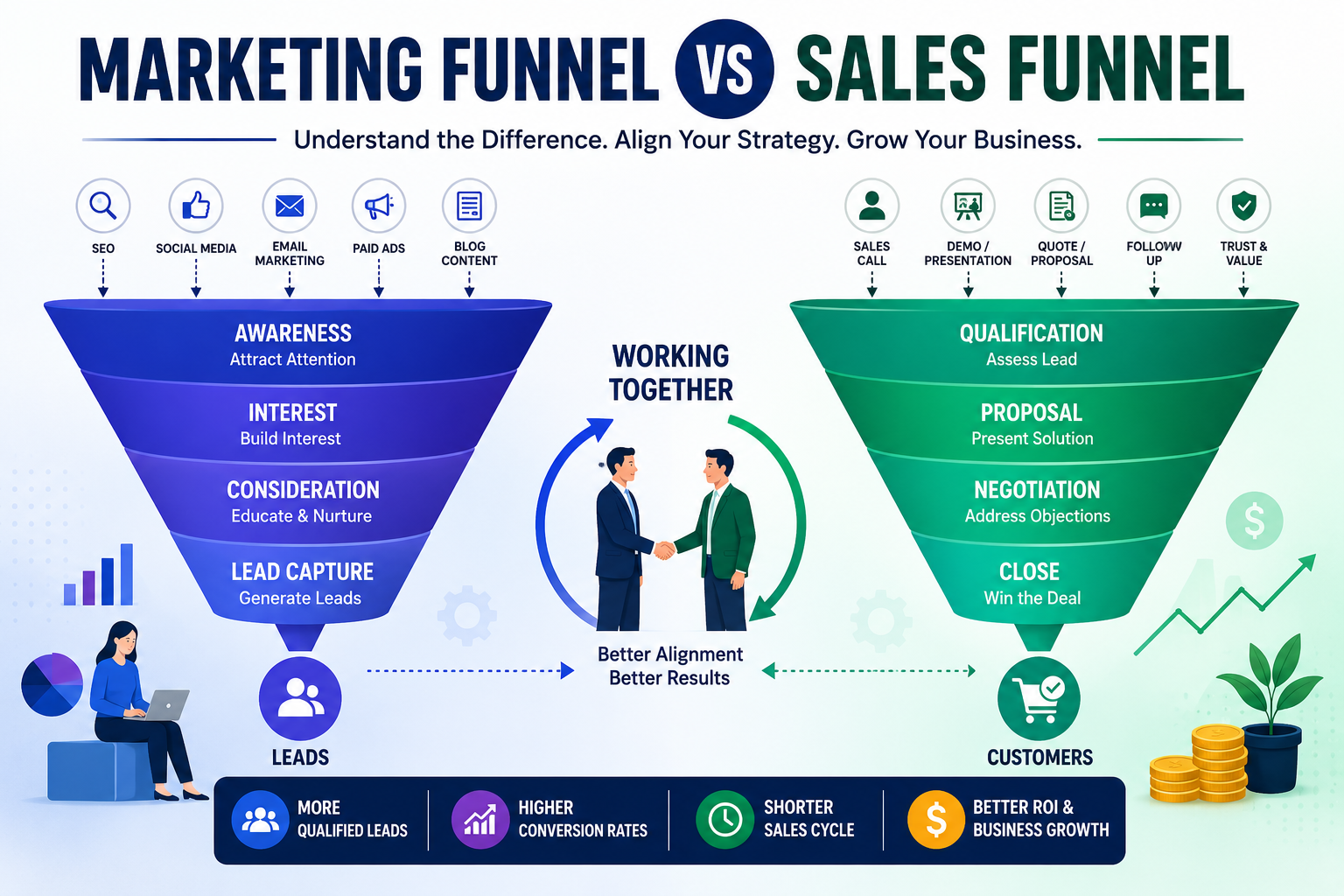
A marketing funnel focuses on creating awareness, educating prospects, and generating qualified leads. A sales funnel takes those qualified leads and guides them through the decision-making process until they become customers. When both funnels are aligned, businesses can improve lead quality, shorten sales cycles, and maximize return on investment.
In this comprehensive guide, you’ll learn the key differences between marketing and sales funnels, their stages, how they work together, and practical strategies to build an effective funnel system that drives sustainable business growth.
What Is a Marketing Funnel?
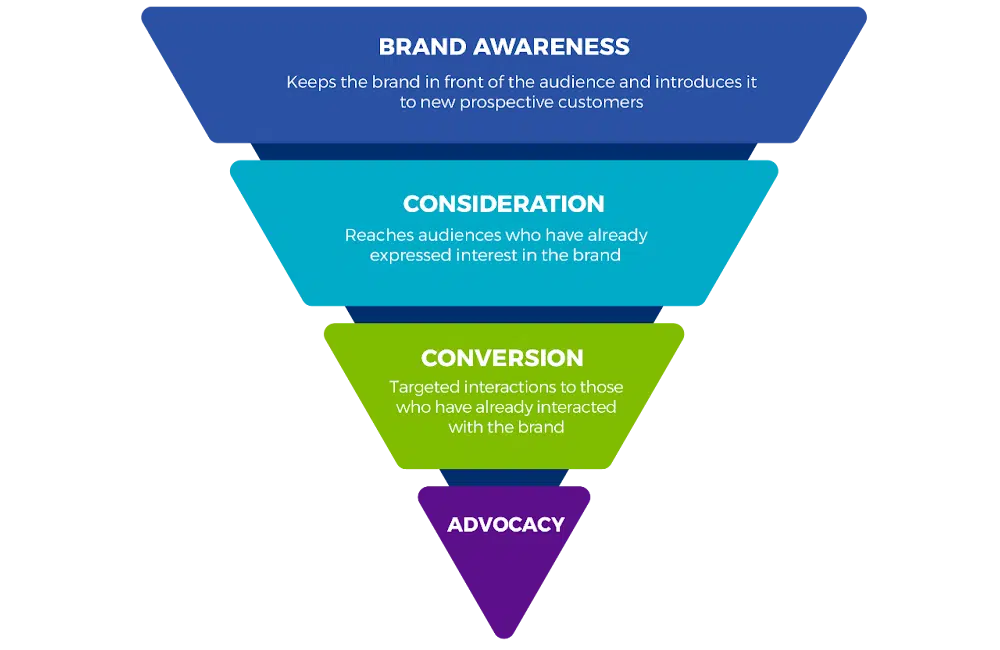
A marketing funnel is a structured process that attracts potential customers, builds awareness, nurtures interest, and prepares prospects to become qualified leads. It focuses on engaging people who may not yet know about your business and gradually moving them closer to making a purchase decision.
The marketing funnel begins when someone first discovers your brand through channels such as search engines, social media, paid advertising, email campaigns, blogs, or referrals. At this stage, the goal is not to sell immediately but to educate, inform, and build trust.
As prospects interact with your content, they move through different stages of the funnel. Some download a free resource, subscribe to your newsletter, watch a webinar, or request more information. These interactions help marketers understand the prospect’s interests and identify those who are most likely to become customers.
A well-designed marketing funnel ensures that your business consistently attracts high-quality leads instead of relying solely on direct sales efforts.
What Is a Sales Funnel?
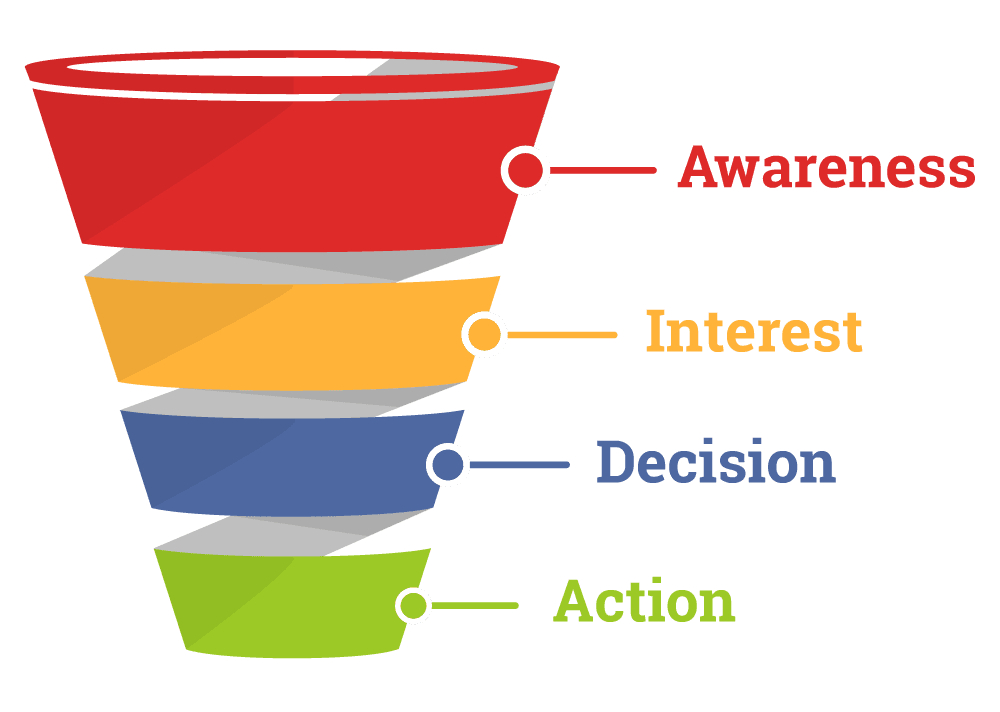
A sales funnel is the process of converting qualified leads into paying customers. Once marketing has generated interested prospects, the sales funnel takes over by addressing objections, demonstrating value, negotiating terms, and guiding prospects toward a purchase.
Unlike the marketing funnel, which focuses on awareness and engagement, the sales funnel concentrates on decision-making and conversion. Sales teams use consultations, product demonstrations, proposals, follow-up calls, and personalized communication to help prospects make confident buying decisions.
The sales funnel is essential because not every qualified lead is immediately ready to buy. Many prospects need additional information, reassurance, or proof before making a purchase. A structured sales process ensures these opportunities are nurtured effectively until they are ready to convert.
Businesses with a strong sales funnel experience higher conversion rates, shorter sales cycles, and improved customer relationships.
Marketing Funnel vs Sales Funnel: What’s the Difference?
Although marketing and sales funnels are often discussed together, they serve different purposes within the customer journey.
A marketing funnel is designed to attract and educate potential customers. It creates awareness, builds interest, and captures leads by providing valuable content and engaging experiences. Marketing teams focus on reaching a broad audience and identifying prospects who are most likely to become customers.
A sales funnel begins after a lead has shown genuine interest. It focuses on converting those qualified leads into customers through personalized communication, consultations, product demonstrations, and negotiations. Sales teams work to address objections, build trust, and close deals.
In simple terms, the marketing funnel generates opportunities, while the sales funnel turns those opportunities into revenue.
Why Businesses Need Both Funnels
Some businesses invest heavily in marketing but neglect their sales process. Others rely on aggressive sales tactics without investing in lead generation. Both approaches limit growth.
A successful business needs both funnels working together.
Without a marketing funnel, sales teams spend too much time chasing unqualified prospects.
Without a sales funnel, valuable leads generated through marketing fail to convert into customers.
When marketing and sales are aligned, businesses can:
- Generate higher-quality leads.
- Improve conversion rates.
- Shorten the customer journey.
- Reduce customer acquisition costs.
- Increase customer lifetime value.
- Build stronger relationships.
- Create predictable revenue growth.
Instead of operating independently, marketing and sales should function as a unified system focused on delivering an exceptional customer experience.
How the Customer Journey Connects Both Funnels
Understanding the customer journey helps explain how marketing and sales funnels complement each other.
A potential customer first becomes aware of your business through marketing efforts such as SEO, social media, Google Ads, blog content, or referrals. They then explore your website, consume educational content, and begin evaluating your products or services.
As their interest grows, they may download a guide, subscribe to your email list, or request more information. At this point, they become a marketing-qualified lead (MQL).
Once they demonstrate buying intent—such as requesting a consultation, scheduling a demo, or asking for pricing—they become a sales-qualified lead (SQL). The sales team then engages with them to answer questions, provide personalized recommendations, and help them make a purchasing decision.
After becoming a customer, the journey doesn’t end. Ongoing customer support, email marketing, loyalty programs, and upselling opportunities continue strengthening the relationship, encouraging repeat business and referrals.
This seamless transition between marketing and sales creates a positive customer experience and maximizes business growth.
Key Benefits of an Integrated Funnel Strategy
Businesses that align their marketing and sales funnels gain several competitive advantages.
Better Lead Quality
Marketing attracts prospects who genuinely match your target audience, making it easier for sales teams to focus on qualified opportunities rather than cold prospects.
Improved Conversion Rates
Personalized communication and consistent messaging throughout the customer journey help prospects feel confident in their purchasing decisions.
Higher Return on Marketing Investment
By converting more leads into customers, businesses generate greater value from their existing marketing efforts without significantly increasing advertising budgets.
Shorter Sales Cycles
Qualified leads require less persuasion because they’ve already been educated through the marketing funnel before entering the sales process.
Stronger Customer Relationships
Consistent communication across both funnels builds trust, improves customer satisfaction, and increases the likelihood of repeat purchases.
Common Mistakes Businesses Make
Many businesses fail to achieve consistent growth because they make avoidable mistakes when building their funnels.
Some of the most common include:
- Treating marketing and sales as separate departments.
- Generating leads without a follow-up process.
- Focusing only on attracting traffic instead of nurturing leads.
- Pushing for immediate sales without building trust.
- Ignoring customer data and behavior.
- Using inconsistent messaging across marketing and sales channels.
- Failing to measure funnel performance.
Recognizing and correcting these issues can significantly improve lead generation, conversion rates, and overall business performance.
Conclusion
In today’s competitive digital landscape, success depends on more than just generating traffic or closing deals. It requires a well-structured funnel that guides potential customers from their first interaction with your brand to becoming loyal advocates. By continuously optimizing your marketing campaigns, sales processes, and customer engagement strategies, you can create a predictable system that drives sustainable business growth.
At Leadswallah, we help businesses design and optimize high-performing marketing and sales funnels that generate qualified leads, improve conversion rates, and maximize return on investment. From SEO and content marketing to performance advertising, lead nurturing, and conversion optimization, our data-driven strategies ensure every stage of your funnel contributes to measurable business success.
Ready to turn more visitors into loyal customers? Partner with Leadswallah to build a complete marketing and sales funnel that attracts the right audience, nurtures high-quality leads, and converts them into long-term customers—helping your business grow smarter, faster, and more profitably.