
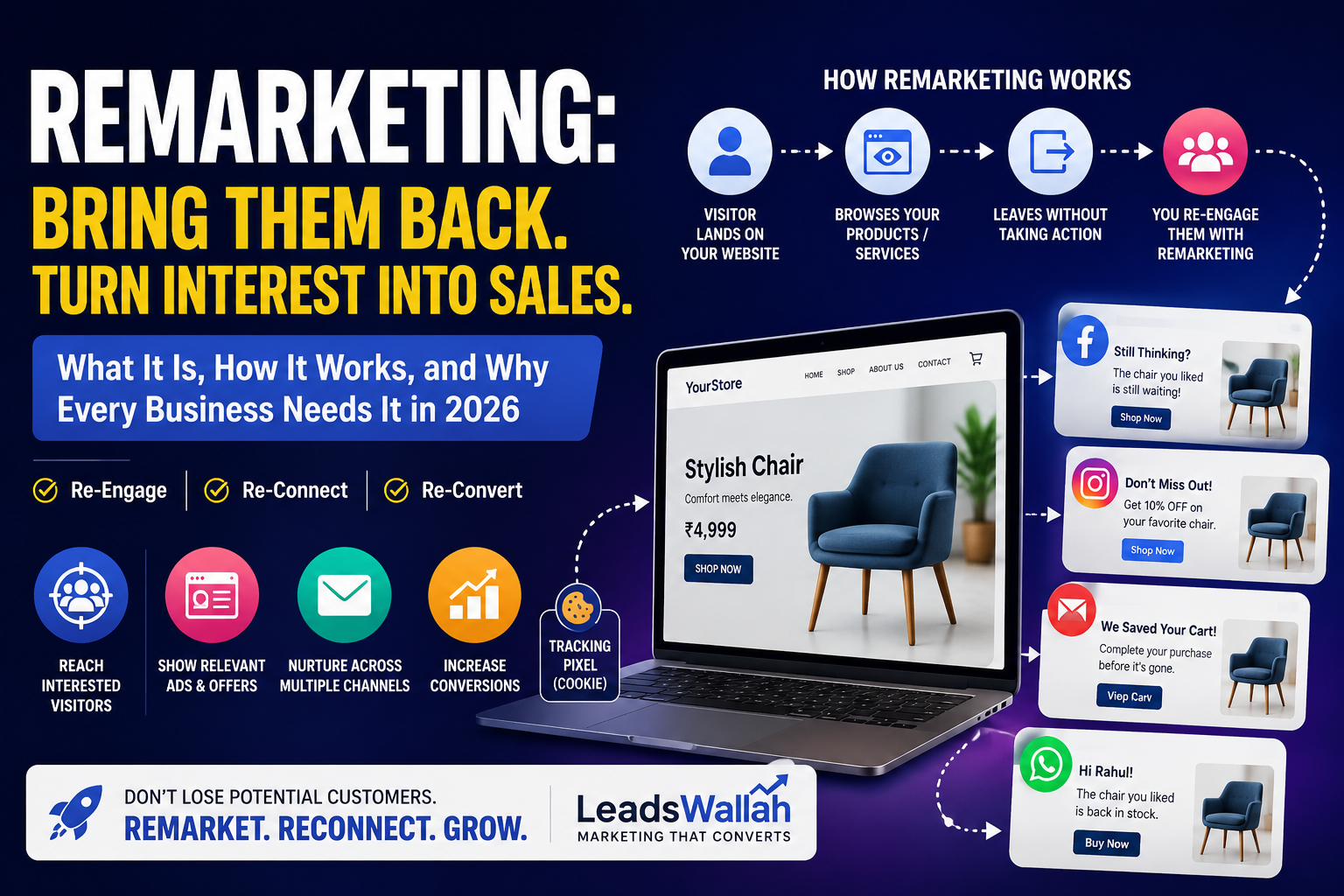
Imagine a potential customer visiting your website, exploring your products, comparing prices, and even adding an item to their cart. Everything indicates they’re ready to buy—but suddenly, they leave without completing the purchase.
Sound familiar?
This scenario happens every day to businesses of all sizes. In fact, most website visitors don’t convert during their first visit. They get distracted, compare competitors, postpone their decision, or simply forget about your brand altogether.
Does that mean those visitors are lost forever?
Not at all.
This is exactly where remarketing becomes one of the most powerful digital marketing strategies available today.
Remarketing allows businesses to reconnect with people who have already interacted with their brand. Instead of constantly spending money to attract new visitors, remarketing focuses on bringing interested prospects back and encouraging them to complete the action they initially abandoned.
Whether it’s completing a purchase, filling out a contact form, booking a consultation, or downloading a resource, remarketing keeps your brand visible until the customer is ready to convert.
In this comprehensive guide, you’ll learn everything about remarketing, including how it works, why it’s important, different remarketing strategies, and how businesses can use it to increase conversions and maximize their marketing ROI in 2026.
What Is Remarketing?
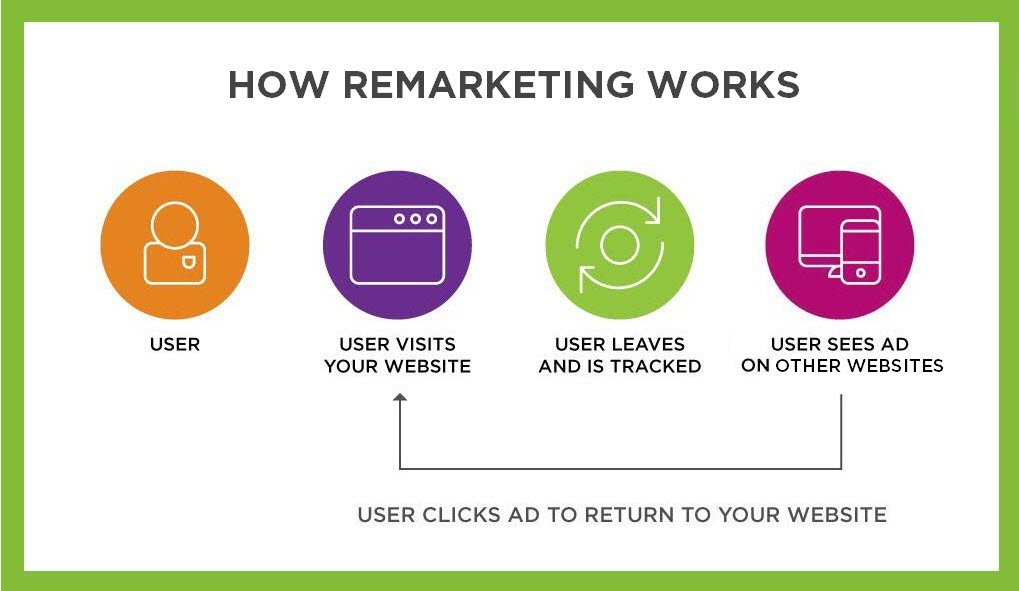
Remarketing is a digital marketing strategy that targets users who have previously interacted with your business but did not complete the desired action.
Instead of marketing to completely new audiences, remarketing focuses on people who already know your brand. These users may have visited your website, viewed a product, watched a video, clicked an advertisement, downloaded an eBook, or added products to their shopping cart without making a purchase.
Remarketing helps businesses stay connected with these potential customers through personalized advertisements, email campaigns, SMS messages, WhatsApp notifications, and other digital channels until they’re ready to take action.
Rather than starting the sales conversation from scratch, remarketing continues an existing conversation.
For example, imagine someone visits an online furniture store and spends several minutes browsing office chairs. They leave the website without making a purchase.
Later that day, while scrolling through Instagram, they see an advertisement showcasing the exact chair they viewed earlier. The following morning, they receive an email offering free shipping if they complete their purchase within 48 hours.
This entire process is remarketing in action.
Why Remarketing Is Important in 2026
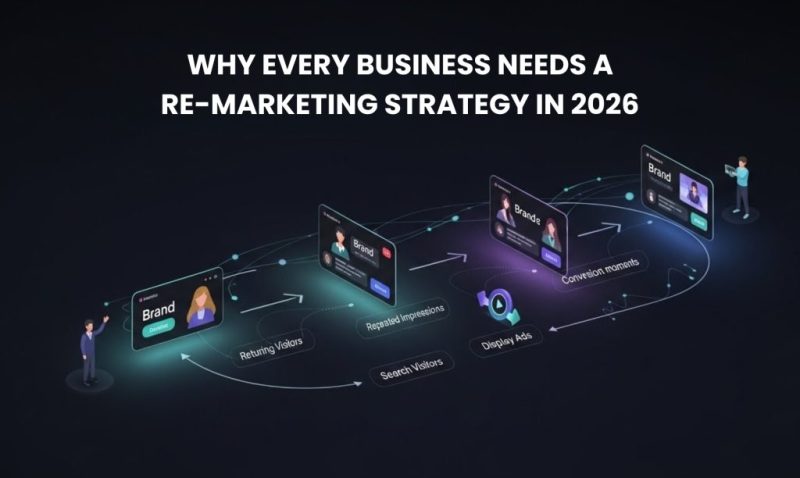
Today’s customers rarely make purchasing decisions instantly.
Before buying, they compare products, read reviews, ask for recommendations, check competitors, and evaluate pricing.
This means that the first website visit is often just the beginning of the buying journey.
Without remarketing, businesses lose countless opportunities because they stop communicating with potential customers after their initial visit.
Remarketing bridges this gap by keeping your business visible throughout the customer’s decision-making process.
Some of the biggest reasons businesses invest in remarketing include:
- Recovering lost website visitors
- Increasing conversion rates
- Reducing cart abandonment
- Improving customer engagement
- Maximizing advertising budgets
- Increasing brand recall
- Building long-term customer relationships
Instead of spending more money acquiring new traffic every day, remarketing helps you get better returns from the traffic you’ve already earned.
Remarketing vs Retargeting: What’s the Difference?
Many marketers use the terms remarketing and retargeting interchangeably, and while they share similar goals, there are subtle differences.
Retargeting primarily focuses on displaying paid advertisements to users based on their online behavior. It commonly uses tracking pixels or cookies to show relevant ads across websites, search engines, and social media platforms after someone visits your website.
Remarketing, on the other hand, is a broader strategy. It includes retargeting ads but also extends to communication through email campaigns, SMS marketing, WhatsApp messages, CRM automation, push notifications, and personalized offers.
Think of retargeting as one tactic within a larger remarketing strategy.
For example:
- Seeing a Facebook ad after visiting a website is retargeting.
- Receiving an abandoned cart email is remarketing.
- Getting a WhatsApp reminder about an unfinished purchase is also remarketing.
Successful businesses often combine multiple remarketing channels to increase the chances of converting interested visitors into customers.
Why Remarketing Works So Well
Remarketing is effective because it targets people who have already shown interest in your business.
Unlike cold audiences who may have never heard of your brand, remarketing focuses on warm prospects who are already familiar with your products or services.
This familiarity significantly increases the likelihood of conversion.
Several psychological principles make remarketing highly successful.
Brand Familiarity Builds Trust
People naturally trust brands they recognize.
Even if someone doesn’t purchase during their first visit, repeatedly seeing your brand across different platforms creates familiarity, making them more comfortable buying from you later.
It Keeps Your Business Top of Mind
Customers often compare multiple businesses before making a purchase.
Remarketing ensures your business stays visible throughout this decision-making process, increasing the chances they’ll return when they’re ready to buy.
Personalized Messages Increase Engagement
Remarketing campaigns can display products that customers actually viewed instead of generic advertisements.
This personalization makes the message more relevant and dramatically improves engagement rates.
Instead of showing “Browse Our Store,” you can remind customers about the exact product they were interested in.
Customers Need Multiple Touchpoints
Marketing research consistently shows that customers usually interact with a brand several times before making a purchase.
Remarketing helps create these additional touchpoints without requiring businesses to spend heavily on acquiring entirely new audiences.
Common Remarketing Scenarios
Remarketing isn’t limited to eCommerce businesses.
Almost every industry can benefit from it.
Here are some common examples:
- An online clothing store reminds shoppers about abandoned carts.
- A real estate agency advertises properties previously viewed by visitors.
- A digital marketing agency reconnects with users who downloaded a free SEO guide.
- A coaching institute reminds students about upcoming batch registrations.
- A SaaS company encourages trial users to upgrade to a paid subscription.
- A travel company promotes holiday packages previously searched by visitors.
- A healthcare clinic reminds patients to book follow-up appointments.
Regardless of the industry, the objective remains the same: reconnect with interested prospects and guide them toward conversion.
Benefits of Remarketing
Remarketing offers numerous advantages that make it one of the highest-performing digital marketing strategies.
Some of its biggest benefits include:
Higher Conversion Rates
Since remarketing targets people who have already interacted with your business, they’re significantly more likely to convert than first-time visitors.
Better Return on Advertising Spend (ROAS)
Rather than constantly paying to reach new audiences, remarketing extracts more value from existing traffic, improving overall advertising efficiency.
Reduced Cart Abandonment
Many customers leave products in their shopping carts without completing the purchase.
Remarketing helps recover these lost sales through personalized reminders and targeted offers.
Improved Brand Awareness
Repeated exposure strengthens brand recognition and builds customer confidence over time.
Cost-Effective Marketing
Remarketing campaigns often cost less than cold advertising because they focus on smaller, more qualified audiences.
Conclusion
Remarketing is one of the most effective digital marketing strategies for turning lost opportunities into loyal customers. While attracting new visitors is important, re-engaging people who have already shown interest in your business often delivers better results at a lower cost. By reminding potential customers about your products or services through personalized ads, emails, SMS, or WhatsApp messages, remarketing keeps your brand top of mind and encourages them to complete their journey.
The key to successful remarketing is relevance. Instead of showing the same message to everyone, segment your audience based on their behavior and deliver personalized content that matches their interests. Whether it’s recovering abandoned carts, nurturing leads, promoting new offers, or re-engaging past customers, a well-planned remarketing strategy can significantly improve conversion rates, strengthen customer relationships, and maximize your return on marketing investment.
As digital competition continues to grow in 2026, businesses that invest in smart, data-driven remarketing campaigns will have a clear advantage over those relying solely on first-time visitors. Remarketing isn’t just about increasing sales—it’s about building lasting connections with customers and ensuring your brand remains their preferred choice.
At Leadswallah, we help businesses create high-performing remarketing campaigns that reconnect with potential customers across Google, Meta, LinkedIn, email, and WhatsApp. From audience segmentation and conversion tracking to personalized ad creatives and campaign optimization, our experts develop strategies that turn website visitors into qualified leads and paying customers.
Ready to recover lost leads and boost your conversions? Partner with Leadswallah and let our performance-driven remarketing solutions help your business grow faster, smarter, and more profitably.