
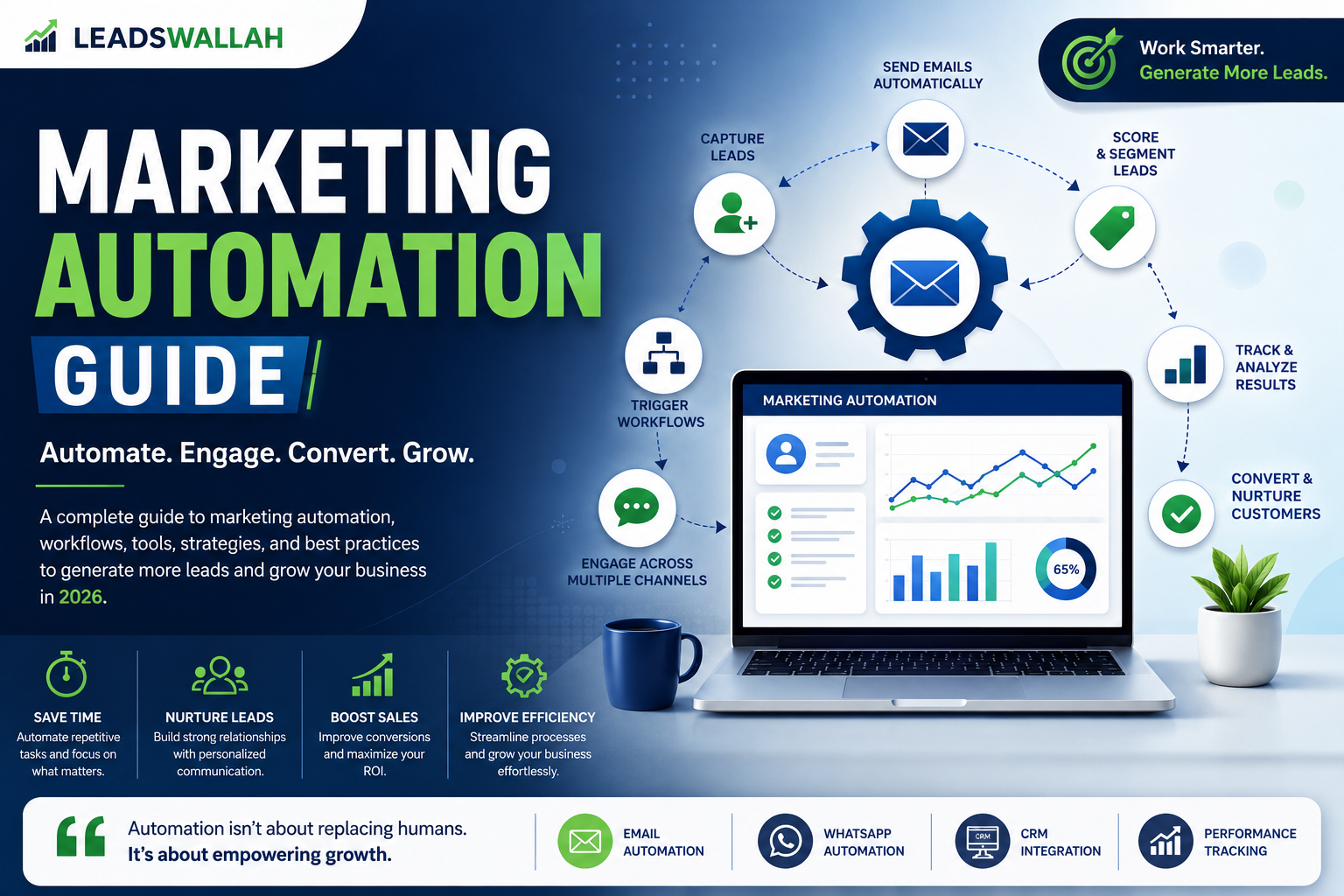
Modern businesses face a common challenge: managing hundreds or even thousands of customer interactions without compromising quality or missing valuable opportunities. Whether it’s responding to enquiries, sending follow-up emails, nurturing leads, or tracking customer behavior, handling everything manually quickly becomes time-consuming and inefficient.
This is where marketing automation transforms the way businesses operate.
Marketing automation enables businesses to automate repetitive marketing tasks while delivering personalized experiences to potential customers at every stage of their buying journey. Instead of manually sending emails, assigning leads, updating customer records, or reminding prospects to take action, automation software performs these tasks automatically based on predefined workflows.
The result is a smarter, faster, and more scalable marketing system that saves time, improves customer engagement, increases lead conversions, and allows businesses to focus on strategic growth rather than routine tasks.
In today’s highly competitive digital landscape, marketing automation has become an essential part of modern business strategy. From startups and small businesses to large enterprises, organizations use automation to nurture leads, improve sales efficiency, personalize communication, and maximize return on investment.
In this comprehensive guide, you’ll learn what marketing automation is, how it works, its key benefits, the best automation workflows, essential tools, common mistakes to avoid, and practical strategies for implementing marketing automation successfully in 2026.
What Is Marketing Automation?
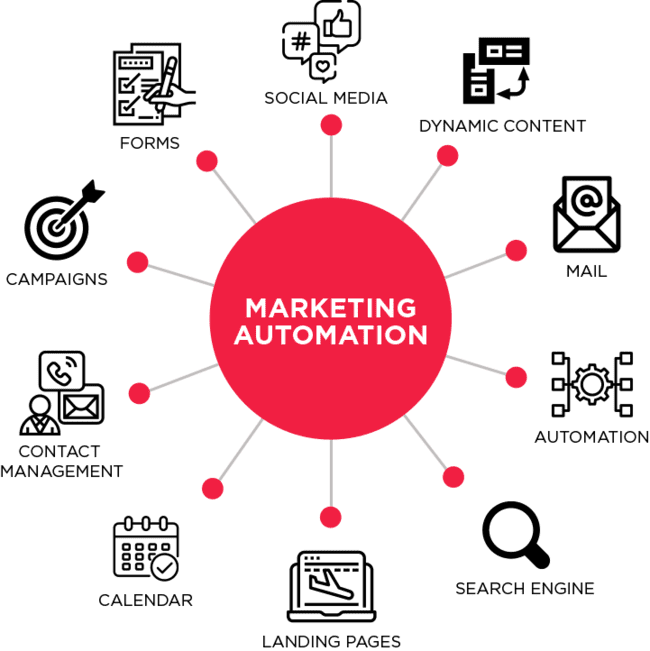
Marketing automation is the use of software and technology to automate repetitive marketing activities, customer communication, lead management, and campaign execution based on customer behavior and predefined rules.
Instead of performing tasks manually, businesses create automated workflows that trigger specific actions whenever a customer performs certain activities.
For example:
- A visitor downloads a free eBook → They automatically receive a welcome email.
- Someone fills out a contact form → The sales team receives an instant notification.
- A customer abandons their shopping cart → An automated reminder email is sent.
- A lead visits the pricing page multiple times → The CRM flags them as a high-priority lead.
- A new customer makes a purchase → A thank-you email and onboarding sequence begin automatically.
These automated actions help businesses stay connected with customers throughout their journey while reducing manual effort and improving response times.
Why Marketing Automation Matters in 2026
Customer expectations have changed dramatically.
People expect businesses to respond quickly, provide personalized experiences, and maintain consistent communication across multiple channels.
Managing this manually becomes increasingly difficult as businesses grow.
Marketing automation solves these challenges by ensuring every customer receives timely, relevant communication without requiring constant manual intervention.
Businesses that adopt marketing automation benefit from:
- Faster lead response times.
- Improved customer engagement.
- Better lead nurturing.
- Higher conversion rates.
- Increased operational efficiency.
- Reduced marketing costs.
- Scalable business growth.
Automation allows businesses to deliver personalized experiences at scale, something that’s nearly impossible through manual processes alone.
How Marketing Automation Works
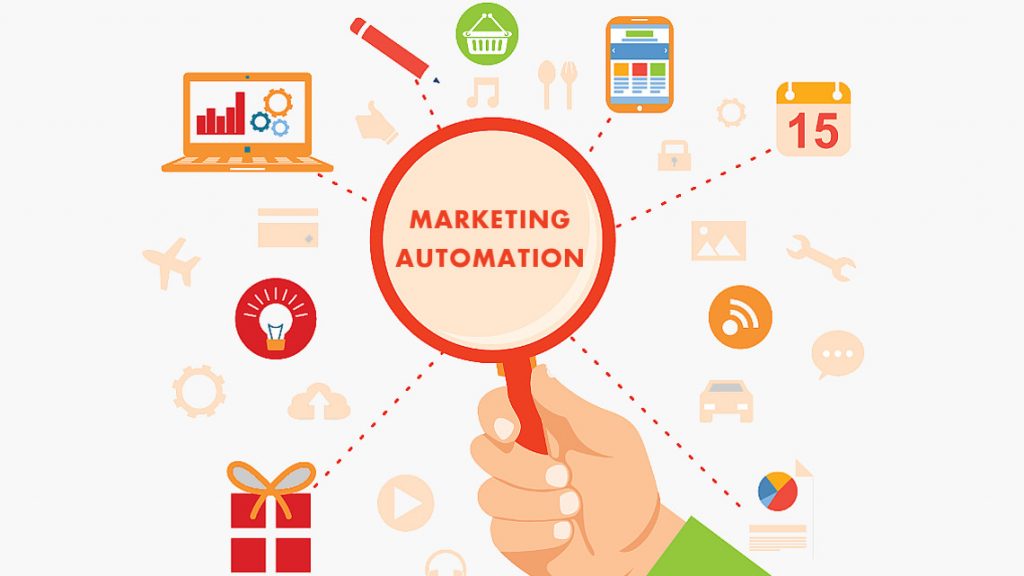
Marketing automation follows a simple but powerful process:
Step 1: Capture Customer Information
The process begins when a visitor interacts with your business by:
- Filling out a contact form.
- Downloading a resource.
- Subscribing to a newsletter.
- Registering for a webinar.
- Making a purchase.
- Clicking an advertisement.
This information is automatically stored within your CRM or marketing automation platform.
Step 2: Segment Your Audience
Not every customer has the same interests or needs.
Automation platforms organize contacts into different segments based on:
- Demographics.
- Location.
- Interests.
- Purchase history.
- Website behavior.
- Lead source.
- Industry.
- Engagement level.
Segmentation enables businesses to send more relevant and personalized communications.
Step 3: Trigger Automated Workflows
Once customers meet specific conditions, automated workflows begin.
Examples include:
- Welcome email sequences.
- Abandoned cart reminders.
- Product recommendation emails.
- Appointment confirmations.
- Follow-up messages.
- Customer onboarding.
- Lead nurturing campaigns.
Each workflow is designed to guide prospects toward the next stage of the customer journey.
Step 4: Track Customer Behavior
Automation platforms continuously monitor customer interactions.
Businesses can analyze:
- Email opens.
- Link clicks.
- Website visits.
- Form submissions.
- Product views.
- Downloads.
- Purchases.
These insights help marketers understand customer intent and improve campaign performance.
Step 5: Optimize Campaign Performance
Marketing automation isn’t a “set it and forget it” solution.
Successful businesses regularly analyze:
- Conversion rates.
- Email engagement.
- Customer journeys.
- Lead quality.
- Campaign ROI.
Continuous optimization ensures automation workflows become more effective over time.
Key Benefits of Marketing Automation
Marketing automation offers far more than convenience.
It directly impacts business growth, customer satisfaction, and operational efficiency.
Saves Time
Automating repetitive activities such as emails, lead assignment, follow-ups, and reporting frees your team to focus on strategy, creativity, and relationship building.
Improves Lead Nurturing
Many leads aren’t ready to purchase immediately.
Automation keeps prospects engaged through personalized content until they’re ready to make a buying decision.
Increases Conversions
Timely follow-ups and relevant messaging significantly improve the likelihood of converting prospects into customers.
Enhances Customer Experience
Customers appreciate receiving useful information at the right time rather than generic promotional messages.
Automation enables highly personalized communication based on customer behavior.
Strengthens Sales and Marketing Alignment
Marketing automation ensures sales teams receive qualified leads with detailed engagement histories.
This improves follow-up quality and increases closing rates.
Reduces Human Error
Manual processes often result in forgotten follow-ups, inconsistent communication, or inaccurate customer records.
Automation standardizes these activities and reduces costly mistakes.
Improves Marketing ROI
Businesses can monitor campaign performance in real time and allocate resources toward the highest-performing channels.
Common Marketing Activities You Can Automate
Almost every stage of the customer journey can benefit from automation.
Some common examples include:
- Lead capture forms.
- Welcome email sequences.
- Lead scoring.
- Customer segmentation.
- Newsletter campaigns.
- Appointment reminders.
- Abandoned cart recovery.
- Product recommendations.
- Customer feedback requests.
- Webinar registrations.
- Social media scheduling.
- CRM updates.
- Sales notifications.
- Loyalty campaigns.
- Re-engagement campaigns.
Automation doesn’t replace marketers—it empowers them to work more efficiently and strategically.
Why Small Businesses Should Invest in Marketing Automation
Many small businesses assume automation is only for large enterprises.
In reality, automation offers significant advantages for organizations with limited time and resources.
Small businesses benefit by:
- Responding faster to enquiries.
- Managing leads more efficiently.
- Reducing manual workload.
- Building stronger customer relationships.
- Scaling marketing without increasing staff.
Affordable automation tools make these capabilities accessible to businesses of every size.
Conclusion
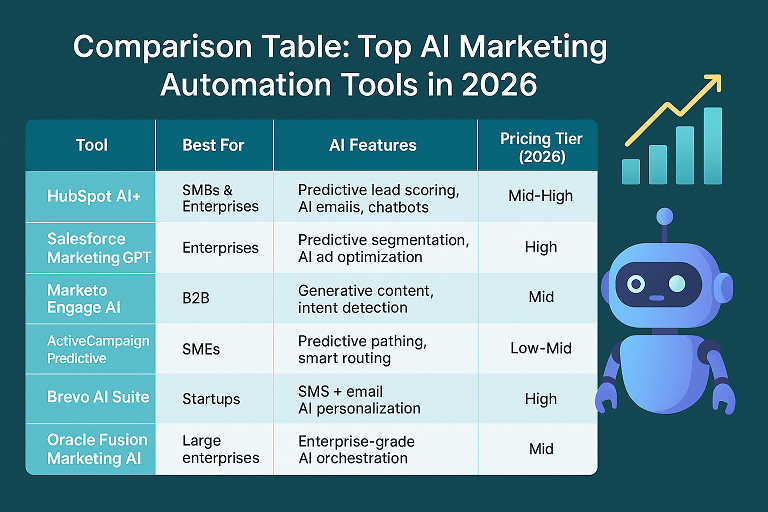
As businesses continue to embrace AI, predictive analytics, and omnichannel marketing in 2026, marketing automation will play an even bigger role in creating seamless customer journeys and supporting sustainable business growth. Companies that invest in automation today will be better equipped to adapt to changing customer expectations and stay ahead of the competition.
At Leadswallah, we help businesses implement intelligent marketing automation solutions that simplify operations, nurture leads, and accelerate growth. From CRM integration and email automation to WhatsApp marketing, lead scoring, workflow creation, and performance tracking, our team designs customized automation systems that help you generate more qualified leads while reducing manual effort.
Ready to automate your marketing and scale your business with confidence? Partner with Leadswallah to build smarter workflows, improve customer engagement, and create a marketing engine that delivers measurable results.
If you’re looking to build a complete lead generation system alongside marketing automation, don’t miss our in-depth guide:
👉 How to Generate High-Quality Leads in 90 Days: A Proven Growth System for Businesses in 2026
This guide explains how to combine SEO, performance marketing, landing pages, CRM integration, and marketing automation into a structured 90-day framework that consistently generates high-quality leads and supports long-term business growth.