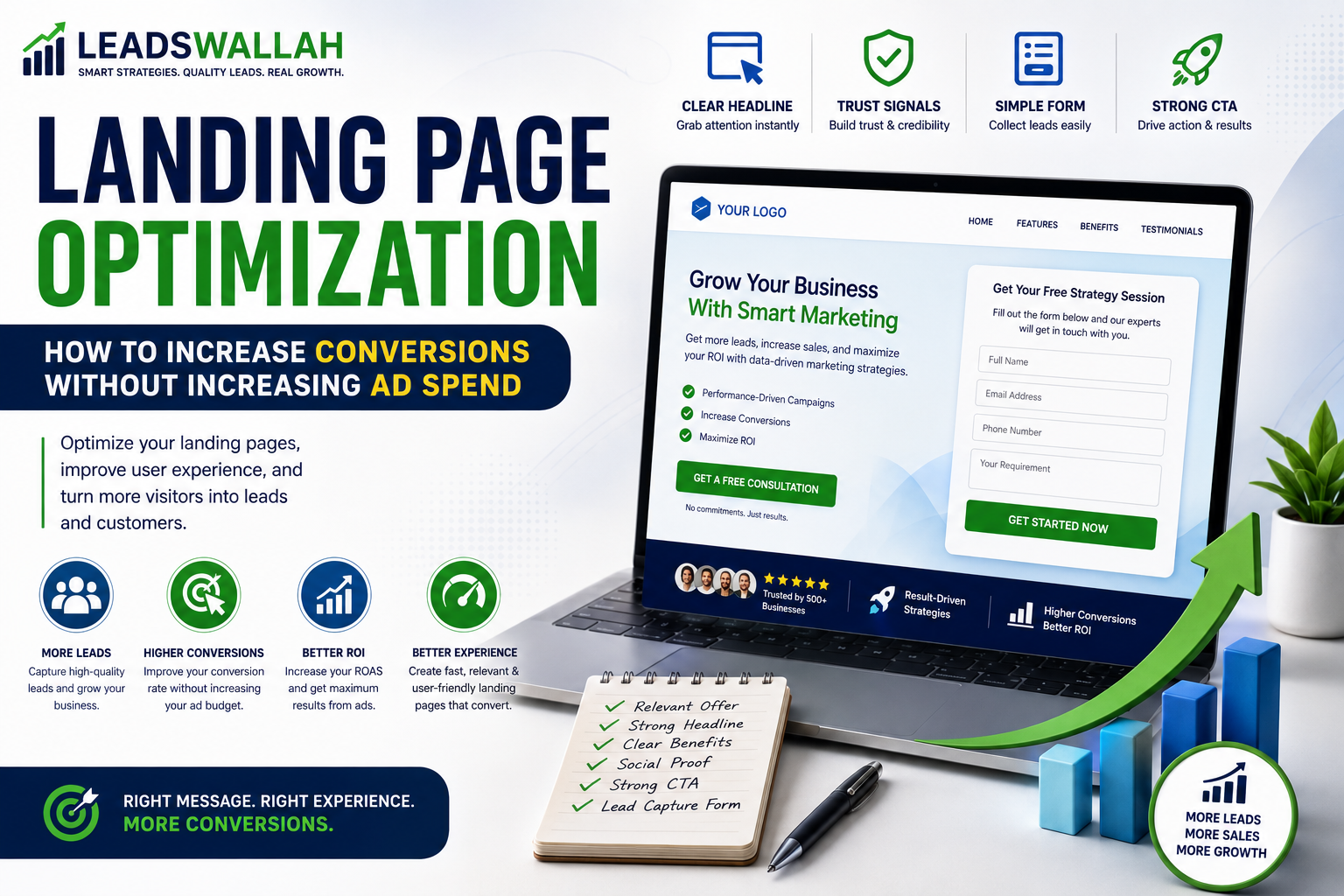
Driving traffic to your website is only half the battle. Whether you’re investing in Google Ads, Meta Ads, SEO, email marketing, or social media campaigns, your success ultimately depends on what visitors do after they land on your page. If your landing page fails to convince them to take action, even the most successful advertising campaign can become an expensive disappointment.
Many businesses assume that increasing their advertising budget is the quickest way to generate more leads and sales. In reality, improving the performance of your existing landing pages can often deliver better results without spending an extra rupee on advertising. A well-optimized landing page can significantly increase conversion rates, helping you generate more enquiries, sales, and revenue from the same amount of traffic.
Landing page optimization is the process of improving every element on a landing page—from headlines and visuals to forms, calls-to-action, and page speed—to encourage visitors to complete a desired action. Small improvements can have a significant impact on campaign performance, customer experience, and overall return on investment.
In this guide, you’ll learn what landing page optimization is, why it matters, how it influences advertising performance, and the essential elements that every high-converting landing page should include in 2026.
What Is a Landing Page?
A landing page is a standalone web page specifically designed to encourage visitors to complete a single action, such as filling out a contact form, downloading an eBook, booking a consultation, requesting a demo, or making a purchase.
Unlike a homepage, which introduces your business and provides multiple navigation options, a landing page focuses on one goal. Every element on the page is designed to guide visitors toward that specific conversion action.
Landing pages are commonly used in:
- Google Ads campaigns
- Facebook and Instagram Ads
- LinkedIn Ads
- Email marketing campaigns
- Webinar registrations
- Product launches
- Lead generation campaigns
- Free trial sign-ups
- Service enquiries
Because they eliminate distractions and focus on a single objective, landing pages generally achieve much higher conversion rates than standard website pages.
Landing Page vs Homepage
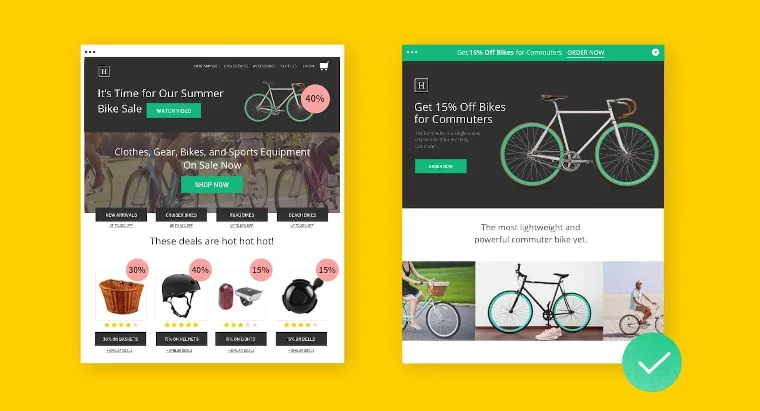
Although both are important parts of a website, landing pages and homepages serve different purposes.
A homepage acts as the central hub of your website. It introduces your business, showcases your services, provides navigation to different pages, and helps visitors explore your brand. Since it serves multiple audiences with different intentions, it often includes numerous links, menus, and calls-to-action.
A landing page, on the other hand, is built around one specific campaign or offer. It removes unnecessary distractions and encourages visitors to complete one desired action. Whether it’s downloading a guide, requesting a quote, or signing up for a free consultation, every section of the page supports that single conversion goal.
For example, if you’re running a Google Ads campaign promoting digital marketing services, sending users to a dedicated landing page with a strong headline, client testimonials, and a contact form will typically perform much better than directing them to your homepage.
Why Landing Page Optimization Matters
Many businesses invest heavily in advertising but overlook the importance of optimizing the pages where visitors arrive. As a result, they generate clicks but fail to convert those visitors into leads or customers.
Landing page optimization helps businesses maximize the value of their existing traffic by improving user experience and encouraging more visitors to take action.
Here are some of the key benefits:
Higher Conversion Rates
A well-optimized landing page removes friction and guides visitors toward completing your desired action. Even small improvements in headlines, forms, or calls-to-action can significantly increase conversions.
Better Return on Ad Spend (ROAS)
When more visitors convert without increasing your advertising budget, your campaigns become more profitable. Optimized landing pages improve the efficiency of every advertising campaign.
Lower Customer Acquisition Cost (CAC)
Increasing conversions means you acquire more customers from the same advertising spend, reducing the overall cost of acquiring each customer.
Improved User Experience
Landing pages that are easy to navigate, mobile-friendly, and fast-loading create a better experience for visitors, increasing trust and encouraging action.
Higher Lead Quality
Optimized landing pages attract visitors who are genuinely interested in your products or services, resulting in better-quality leads for your sales team.
How Landing Pages Impact ROAS
Your advertising campaign and landing page work together.
Imagine two businesses spending the same amount on Google Ads.
Business A sends visitors to a generic homepage with multiple navigation options and no clear call-to-action.
Business B sends visitors to a dedicated landing page focused entirely on one offer with a compelling headline, customer testimonials, and a simple enquiry form.
Although both businesses receive the same number of clicks, Business B generates significantly more leads because its landing page is designed for conversions.
Higher conversions mean:
- More leads.
- Lower cost per acquisition.
- Better return on ad spend.
- Greater profitability.
This is why landing page optimization is one of the fastest ways to improve advertising performance without increasing marketing budgets.
Anatomy of a High-Converting Landing Page
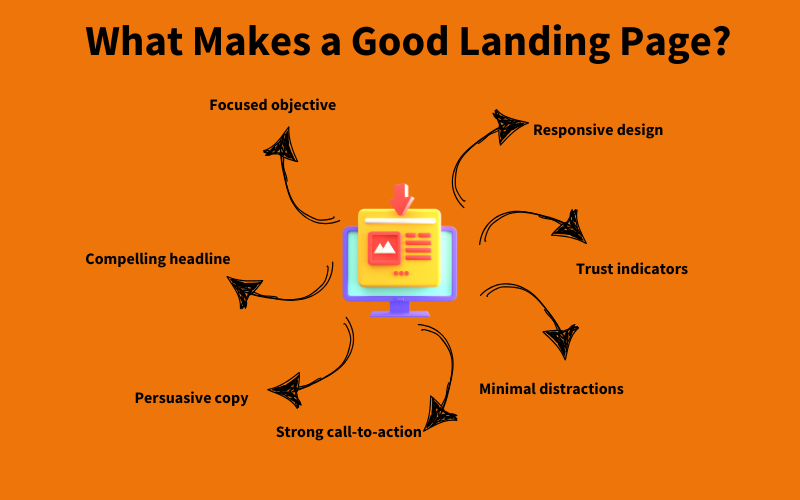
Successful landing pages follow a proven structure that keeps visitors focused on one goal.
Here are the essential elements every landing page should include.
1. A Clear and Compelling Headline
Your headline is the first thing visitors notice.
It should immediately communicate:
- What you offer.
- Who it’s for.
- Why it matters.
For example:
Increase Your Business Leads with Performance-Driven Digital Marketing
A strong headline captures attention and encourages visitors to continue reading.
2. A Persuasive Subheadline
The subheadline expands on the main headline by explaining the value visitors will receive.
For example:
“Generate high-quality leads, improve conversions, and maximize your marketing ROI with customized digital marketing strategies.”
3. Strong Visuals
Images and videos help communicate your message more effectively than text alone.
High-quality visuals might include:
- Product demonstrations
- Team photos
- Service illustrations
- Customer success stories
- Dashboard screenshots
- Explainer videos
Visuals should reinforce your offer rather than distract from it.
4. A Clear Value Proposition
Visitors should quickly understand why they should choose your business over competitors.
Highlight benefits such as:
- Proven expertise
- Faster results
- Personalized strategies
- Transparent pricing
- Dedicated support
- Measurable outcomes
Focus on customer benefits rather than simply listing features.
5. Trust Signals
People are more likely to convert when they trust your business.
Build credibility by including:
- Customer testimonials
- Google reviews
- Client logos
- Industry certifications
- Awards
- Case studies
- Security badges
- Years of experience
Social proof reduces uncertainty and increases confidence.
6. A Strong Call-to-Action (CTA)
Every landing page should have one primary action.
Examples include:
- Get a Free Consultation
- Request a Quote
- Download the Guide
- Book a Demo
- Start Your Free Trial
- Contact Our Experts
Your CTA should be visible, action-oriented, and repeated throughout the page.
7. Simple Lead Capture Form
Long forms often reduce conversions.
Ask only for essential information, such as:
- Name
- Phone Number
- Company Name (if relevant)
The easier it is to submit the form, the higher the likelihood of conversion.
8. Mobile-Friendly Design
Most users now browse websites on smartphones.
Your landing page should:
- Load quickly.
- Display properly on all screen sizes.
- Use readable text.
- Include touch-friendly buttons.
- Make forms easy to complete on mobile devices.
Mobile optimization directly impacts conversion rates.
9. Fast Page Speed
Visitors expect pages to load almost instantly.
Slow-loading pages increase bounce rates and reduce conversions.
Optimize:
- Image sizes
- Code
- Hosting
- Caching
- Scripts
A faster page improves both user experience and search engine rankings.
Common Landing Page Mistakes
Many landing pages fail because they include unnecessary distractions or confusing messaging.
Avoid these common mistakes:
- Multiple competing calls-to-action.
- Weak or generic headlines.
- Long, complicated forms.
- Slow page loading speeds.
- Poor mobile experience.
- Lack of trust signals.
- Too much text with no visual hierarchy.
- Sending paid traffic to generic homepage instead of a dedicated landing page.
Correcting these issues can dramatically improve conversion performance.
Conclusion
Landing page optimization is one of the most cost-effective ways to improve your digital marketing performance. Instead of increasing your advertising budget, you can generate more leads and sales by enhancing the pages where your visitors take action. A well-designed landing page with a compelling headline, clear value proposition, persuasive call-to-action, strong trust signals, and a seamless user experience can significantly increase conversion rates while lowering your customer acquisition costs.
The most successful businesses understand that every click is valuable. Rather than focusing only on driving more traffic, they invest in optimizing the customer journey after the click. Continuous testing, analyzing user behavior, and refining landing page elements help improve campaign performance over time and maximize the return on every advertising investment.
At Leadswallah, we specialize in building high-converting landing pages that turn visitors into qualified leads and paying customers. From conversion-focused design and persuasive copywriting to A/B testing, page speed optimization, and CRM integration, our team creates landing pages that support your business goals and improve your overall marketing performance.
Ready to increase your conversions without increasing your ad spend? Partner with Leadswallah to build landing pages that attract, engage, and convert—helping you generate more leads, maximize your advertising ROI, and grow your business with confidence.